
Checking Criminal History in Cumberland County
No single database contains a complete Cumberland County criminal history. Define the question first. A filed charge or court date belongs in the North Carolina eCourts Portal and the Clerk of Superior Court file. Current custody belongs in the sheriff’s Active Inmate Lookup. An incident narrative comes from the agency whose officer made the report. State prison or supervision belongs in the North Carolina Department of Adult Correction system. A person seeking a fingerprint-supported copy of their own state record must use the NCSBI Right to Review process.
Gather a full legal name, date of birth when lawfully available, likely spelling variants, and any case, citation, incident, booking, or offender number. A number is much safer than a name alone. Then follow the record from the source that created it to the source that recorded the outcome.
- Search eCourts for filed Cumberland County cases, using the case or citation number when known.
- Compare the county, court division, filing dates, and case number before treating a name result as relevant.
- Check the sheriff’s custody tool for a current or recent booking, allowing time for intake.
- Request the incident report from CCSO, Fayetteville Police, Hope Mills Police, Spring Lake Police, or the other creating agency.
- Ask the Clerk for the paper file, copies, or a certified search when an official court result is needed.
Two Cumberland Criminal Record Counters
Cumberland County’s main record offices sit next door to each other, yet their files remain separate. The Judge E. Maurice Braswell Cumberland County Courthouse at 117 Dick Street holds District and Superior Court files under the Clerk of Superior Court. The Law Enforcement Center at 131 Dick Street houses the Sheriff’s Office, Reports Center functions, warrant and service units, and detention operations. A court disposition will not come from the jail counter. Likewise, the clerk’s file is not the full deputy incident report.
The official Cumberland County Sheriff site shows the sheriff services that lead to arrest, report, warrant, fingerprint, and jail records.
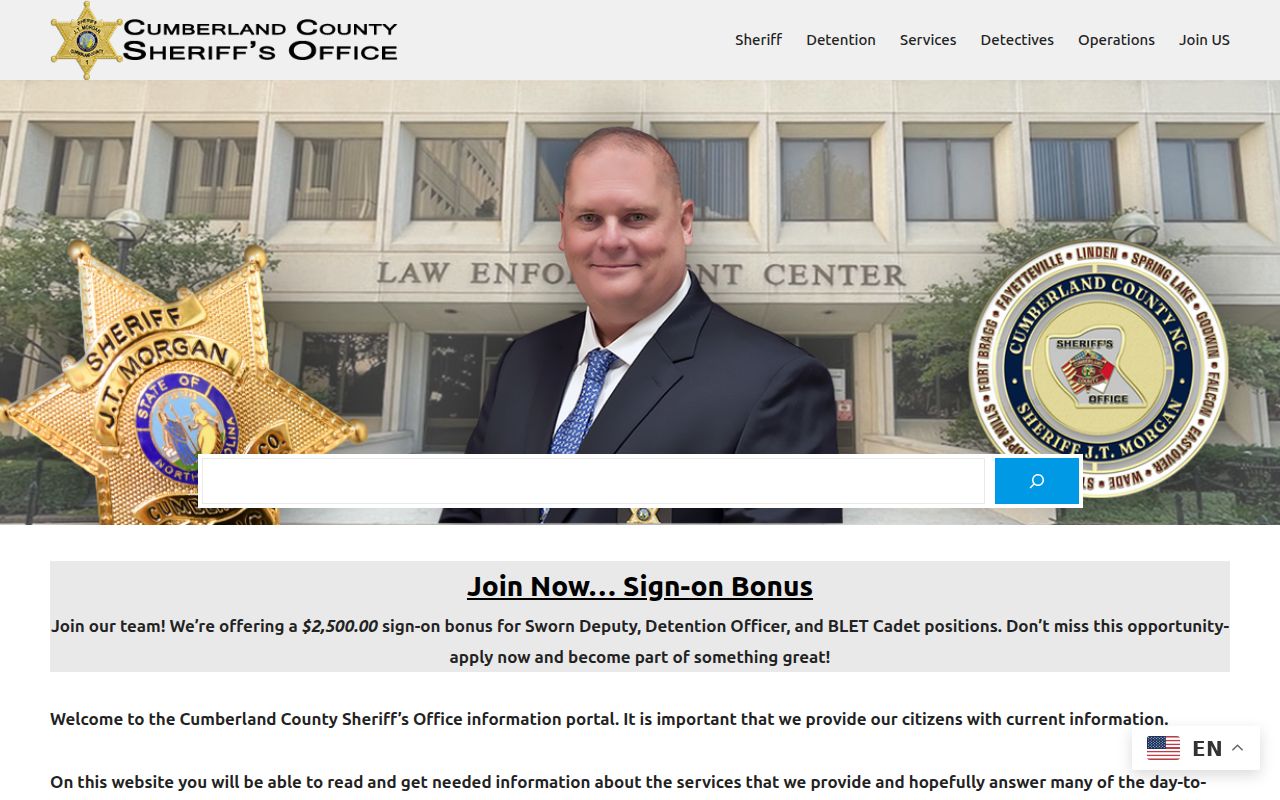
The Sheriff’s Reports Center, also identified through REMIC records operations, is the first county route for a deputy-created incident report. Call 910-323-1500 when a report is missing online, or visit 131 Dick Street with the incident number, date, location, names involved, and a narrow description of the needed record.
The Judicial Branch courthouse profile identifies the public court-record counter at the neighboring building.
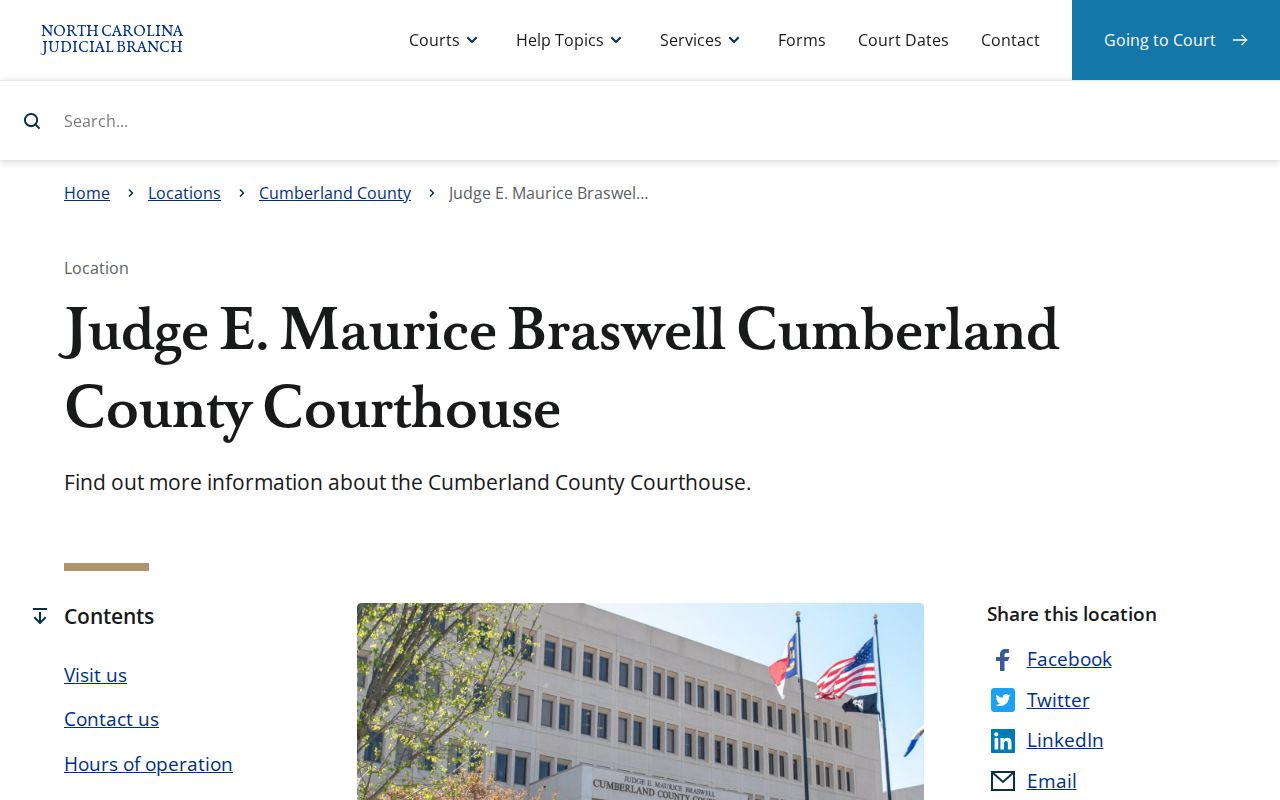
The courthouse is open weekdays from 8:00 a.m. to 5:00 p.m. Its main and clerk number is 910-475-3000. Public terminals support searches, while the clerk supplies paper files, certified results, and older material that is not visible online.
North Carolina Official Background Checks
North Carolina does not offer the general public an unrestricted SBI name-search portal. The North Carolina State Bureau of Investigation, Criminal Information and Identification Section maintains the fingerprint-supported Computerized Criminal History system. Its public personal product is a State Right to Review. The subject submits fingerprints, the current form, identification details, and the stated fee. This review is the sound route for checking completeness and starting a correction challenge, but it covers North Carolina rather than a full national history.
The NCSBI Right to Review page explains the subject-only state process and its current instructions.
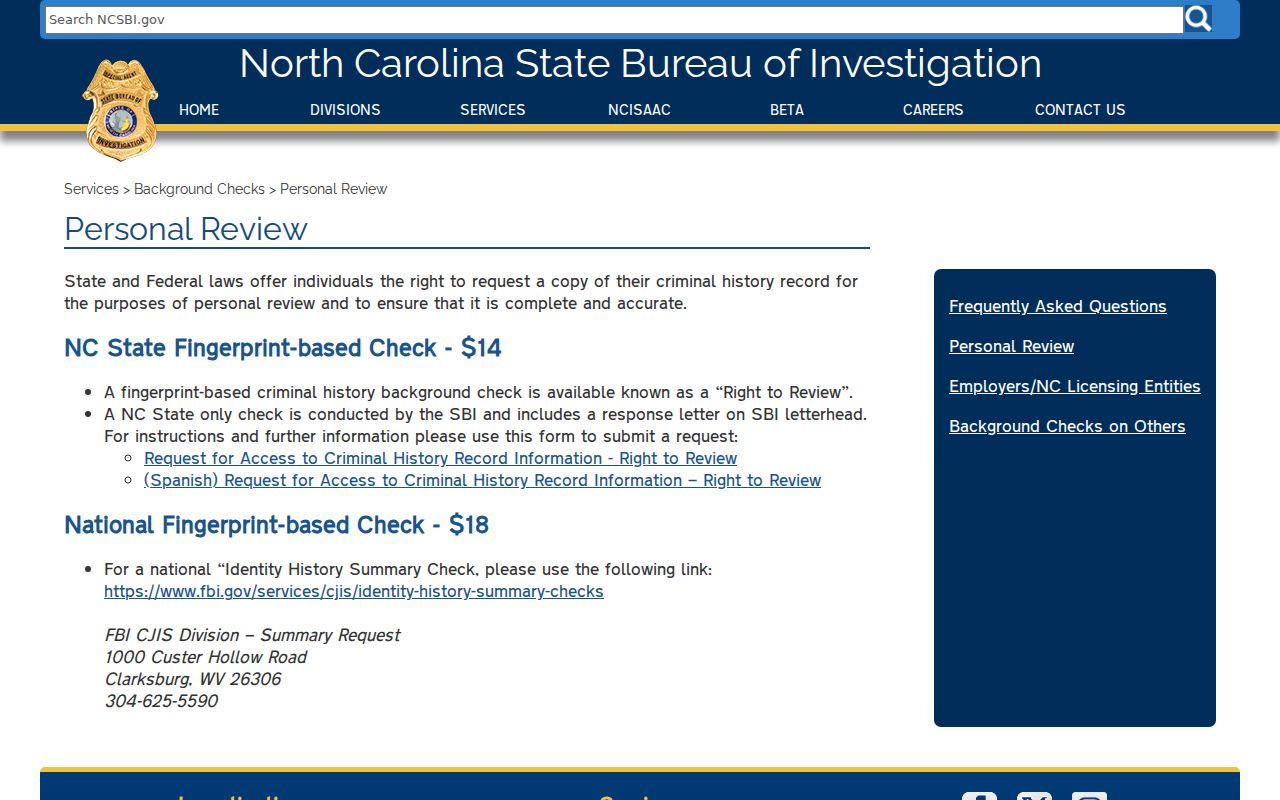
The state review costs $14. A national personal Identity History Summary runs through the FBI and carries an $18 federal fee. These personal-review products are distinct from checks performed through a legally authorized licensing or agency channel.
| Official route | Scope | Base fee | Use |
|---|---|---|---|
| Cumberland Clerk search | County court records | $25 | Certified county court search |
| NCSBI Right to Review | Subject’s North Carolina record | $14 | Fingerprint review and correction |
| Authorized SBI state and national check | Authorized statutory channel | $38 | Only where law and an access agreement permit |
| FBI Identity History Summary | Subject’s national fingerprint record | $18 | Personal federal review |
| eCourts Portal | Public case information | Free | Research, not certified proof |
Cumberland Name Matches Need Fingerprints
A same-name result does not prove identity. Court and jail searches can produce people with similar names, incomplete middle names, changed surnames, or typing differences. Compare stable details only where public and appropriate, including the case number, dates, county, court division, booking identifier, and reported agency. NCSBI treats fingerprint comparison as the identification standard because fingerprints connect an arrest cycle to one person more reliably than text fields.
The NCSBI fingerprinting information directs applicants to local law enforcement and publishes the state rate structure.
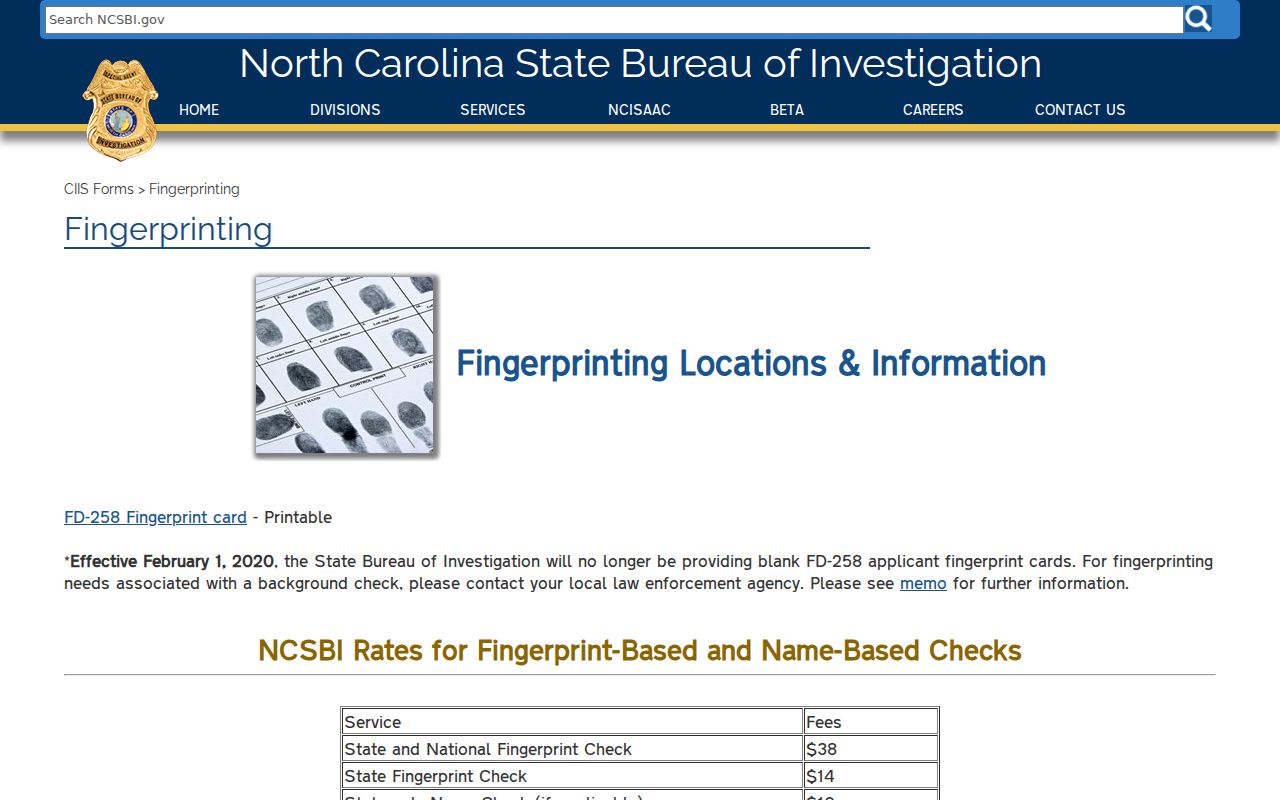
NCSBI stopped supplying blank FD-258 cards in 2020. Cumberland County residents should call the sheriff at 910-323-1500 before a visit to confirm fingerprint hours, appointments, acceptable identification, card supply, and any local rolling charge. Do not send Social Security numbers or fingerprint images through ordinary email unless an official secure process expressly requires it.
Note: The search widget is not an official or FCRA-compliant screening product; use the authorized agency process required for the specific purpose.
Criminal Record Types
One event can produce records with different owners and different time frames. The arresting agency creates an incident or arrest report. Cumberland County Detention Center creates the booking entry. A magistrate records release terms and the first court date. The Clerk then maintains the prosecution file if charges reach court. Fingerprints may start an NCSBI criminal-history cycle, and the court’s disposition should later flow back to it.
Other Cumberland County criminal records answer narrower questions. A warrant is judicial process, not a conviction. NCDAC supervision data concerns probation, parole, post-release supervision, or state incarceration. The NCSBI registry publishes qualifying sex-offender information, while the sheriff performs local registration and verification. Expunged, juvenile, protected-victim, and confidential investigative material is not opened merely because a public portal exists.
- Booking
- Jail intake that records identity, photograph, fingerprints, charges, bond, and custody status.
- Disposition
- The outcome recorded for a charge, such as conviction, dismissal, or acquittal.
- Bond
- The judicial conditions or security set for release while a case is pending.
- Order for arrest
- Judicial process that may follow a failure to appear or another legal trigger.
- Expunction
- North Carolina’s statutory term for removing qualifying records from public effect and access.
Four Cumberland Arrest Records
An arrest commonly creates four distinct record tracks: police documentation, jail booking, magistrate paperwork, and a court case if prosecution follows. Fingerprint-supported information can also reach NCSBI. The charge asserted by an officer can differ from the charge later filed by the District Attorney, and both can differ from the charge disposition. Read each system at its own stage instead of merging them into one narrative.
For example, a Fayetteville Police arrest report remains with Fayetteville Police. If the person is booked locally, custody data belongs to CCSO at 131 Dick Street. Filed charges and later outcomes belong to the Clerk at 117 Dick Street. A fingerprint cycle and reported disposition belong to NCSBI. The same division applies to reports created by Hope Mills Police or Spring Lake Police.
When a recent booking is absent, allow for processing. CCSO says police pre-booking may take four hours or more, followed by another four to eight hours of jail intake. Other explanations include release, citation without custody, booking in another jurisdiction, transfer, or a spelling mismatch. Call the detention information desk at 910-672-5630 or 910-672-5622 when an urgent custody check cannot wait.
Inside a Cumberland County Criminal Record
The fields depend on the product. An SBI rap sheet is organized around identity and fingerprint-supported arrest cycles. A court file emphasizes its case number, division, parties, filed charges, events, orders, disposition, and sentence. A booking profile focuses on intake, custody, charges alleged at booking, bond, court date, and release. Protected identifiers and confidential material should not appear in the public version.
| Name and identifiers | Legal name, aliases, birth or demographic details where lawfully shown, plus case, booking, state, or federal identifiers. |
|---|---|
| Arrest and booking | Arrest date and agency, booking time, booking number, custody status, and photograph where the agency publishes it. |
| Charges and statutes | The alleged offense, statutory citation, charge level, and later filed charge or amendment. |
| Disposition | Outcome for each charge, which may include conviction, dismissal, or acquittal. |
| Sentence | Judgment, active term, probation, post-release terms, restitution, and other public orders. |
| Custody or supervision | County jail, state prison, probation, parole, post-release, transfer, or release status where public. |
Read every charge separately. A case can contain several counts with different results. “Dismissed” describes an outcome; it does not by itself prove that every related arrest or repository entry has been expunged.
Cumberland Custody Across Three Systems
Use the Cumberland County Active Inmate Lookup for present or very recent local custody. The Detention Center is a county jail for pretrial detainees and qualifying sentenced inmates, not a state prison. Its maximum capacity is listed as 884 in the county’s fiscal 2024 adopted budget, and intake includes searches, two health and needs screens, warrant checks, a photograph, fingerprints, and data entry before classification.
The NCDAC Public Offender Search covers people in state correctional custody or current and former state supervision.
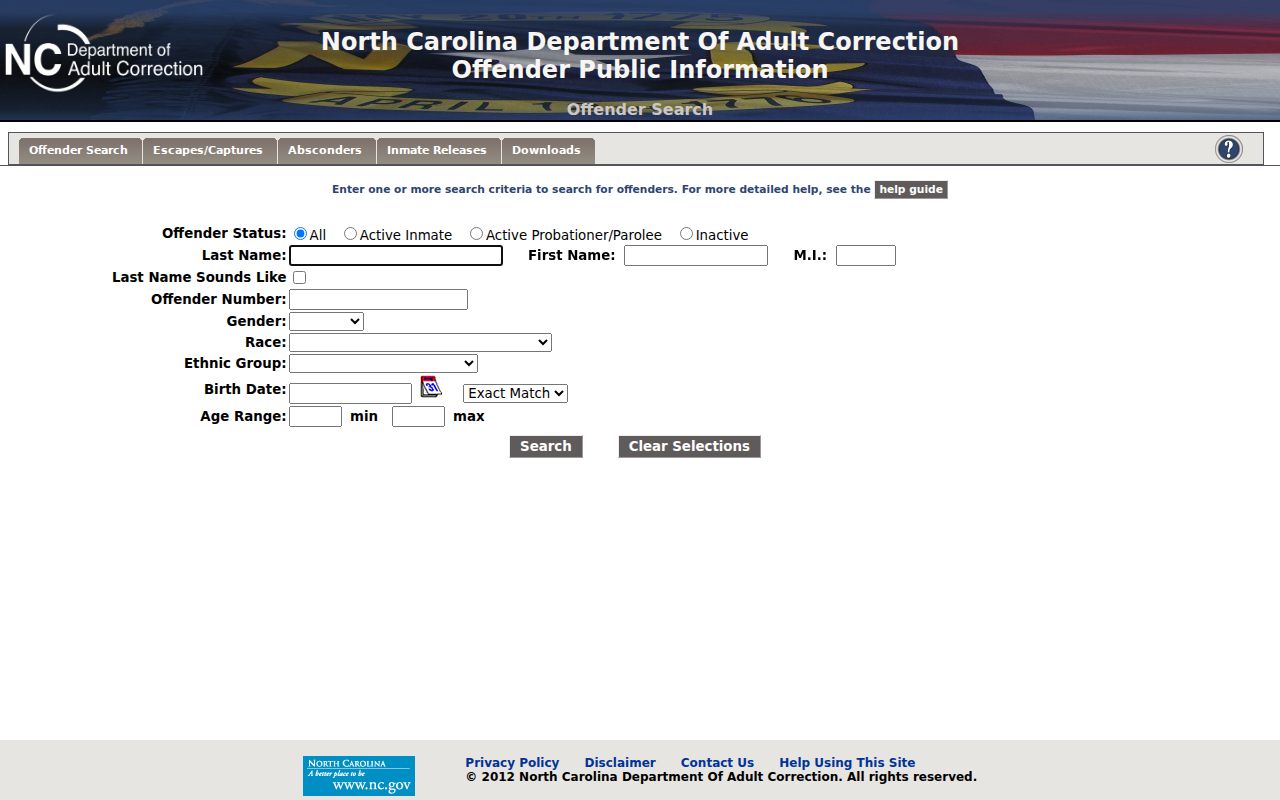
A missing county jail result may mean transfer to NCDAC, but it may also mean release or a booking delay. Confirm a related Cumberland case in eCourts or with the Clerk. Federal custody is a third lane and uses the Bureau of Prisons locator. Fort Bragg and federal matters can involve military or federal custodians even when conduct occurred within the county.
Note: Jail custody, state supervision, and a court disposition are separate facts; confirm all three before drawing a conclusion.
Public Access Laws in North Carolina
North Carolina Public Records Law treats government records as public property, but criminal-record access has firm limits. Court files are inspected under rules governing clerk records. Police investigative material is not automatically public, though the law identifies basic incident and arrest facts that must be available. Agencies may redact juvenile, victim, medical, Social Security, intelligence, and other protected data. A requester should describe an existing record with enough detail to locate it; the agency does not have to create new analysis.
Key statutes:
G.S. 132-1 defines public records and states the general right of access.
G.S. 132-1.4 separates public arrest and incident facts from protected investigative files.
G.S. 7A-109 governs inspection and copies of clerk records, subject to confidentiality law.
G.S. 15A-146 addresses expunction of qualifying dismissed and not-guilty charges.
G.S. 15A-145.5 sets eligibility and waits for certain nonviolent conviction expunctions.
Public access is not permission to harass, retaliate, misidentify, or defame. For registry records, North Carolina law and NCSBI warnings specifically prohibit threats, stalking, intimidation, and harassment.
Cumberland Criminal Reports Through REMIC
CCSO calls its public-facing report hub the Reports Center and identifies REMIC, or Records, within its organization. Start there for a sheriff-created incident report, crime statistics, or civil search and service information. If the desired report is not available, call 910-323-1500, visit the Law Enforcement Center, or make a focused Chapter 132 request. Supply an incident number when known, plus the date and time, place, people involved, investigating deputy, desired format, and clear description.
Public arrest information can include the time, date, place, and nature of a reported violation; the arrested or charged person’s name, sex, age, address, and allegation; and facts about the arrest circumstances. Witness statements, investigative narratives, evidence details, and intelligence may remain closed unless voluntarily released or ordered disclosed. CCSO does not publish one universal report-copy fee or guaranteed turnaround, so ask before ordering.
A city officer’s report does not move to REMIC merely because the arrestee enters the county jail. Request Fayetteville, Hope Mills, or Spring Lake police material from that department. Then use the Clerk for the resulting prosecution and CCSO for the booking.
Sealed, Expunged, and Restricted Records
Juvenile delinquency files, protected victim and minor information, Social Security numbers, expunged cases, and nonpublic investigative material do not belong in an ordinary public result. North Carolina uses “expunction” as its statutory term. Relief can remove qualifying records from public effect and access, but limited confidential indexes and agency access may remain as Article 5 permits.
For a dismissed or not-guilty charge, review G.S. 15A-146 and the current court forms. Automatic processes have faced implementation and data-quality issues, so verify the Cumberland docket rather than assuming the result vanished. Conviction relief under G.S. 15A-145.5 excludes many offenses, including Classes A through G felonies, Class A1 misdemeanors, offenses with assault as an essential element, impaired driving, registry offenses, and other listed categories. One qualifying nonviolent misdemeanor may use a three-year wait measured from conviction or completion of the active sentence and supervision, whichever is later.
Petitions are filed with the Cumberland Clerk in the county and case required by law. Different grounds use different AOC forms. A petition may require affidavits, record and warrant searches, restitution information, and notice to prosecutors. Confirm the current fee or waiver rules at 910-475-3000.
Verify Cumberland Criminal Record Expunctions
A dismissal is not the same as an expunction. The court outcome can be public even though no conviction occurred, and an arrest cycle may still appear until the required removal process is complete. After an expunction order, allow processing time, check the public eCourts result, and obtain an NCSBI Right to Review to see whether the fingerprint-supported state record reflects the change.
If stale data remains, start with the reporting source. Bring the order and exact identifiers to the Clerk for the court file. Use NCSBI’s Written Exception Form and correction process for the Computerized Criminal History record. A private database result is not proof that the official order failed. Confirm with each originating government office because copied information may update on a different schedule.
North Carolina expunction law is detailed and changes over time. The live statute, current AOC form, Cumberland case docket, and advice from a qualified lawyer should control over an old summary.
Cumberland Criminal Cases in eCourts
All 100 North Carolina counties have used Enterprise Justice, also called Odyssey, since October 13, 2025. In the public Portal, select Cumberland County and choose the person, case-number, or citation path. Depending on context, attorney and business searches may also appear. Open a likely result only after checking the file number, county, division, dates, and party information. Portal can display case status, charges, hearings, disposition, attorneys, financial entries, and register-of-actions details, but visibility varies.
| Portal field | Control | Requirement | Search note |
|---|---|---|---|
| Location or county | Dropdown | Context dependent | Select Cumberland for local cases. |
| Search type | Tab or choice | Yes | Person, case number, or citation number. |
| First and middle name | Text | Optional | Use to narrow, while checking variants. |
| Last name | Text | Usually yes for name search | Never treat the name alone as identity proof. |
| Case or citation number | Text | Yes on that path | Use the exact number. |
| Search or reset | Button | Not applicable | Submit or clear the query. |
Portal is informational. The Judicial Branch directs people who need a criminal background check to the Clerk, whose Cumberland search and certification costs $25. Missing images, archives, certified copies, and paper-only material also require the clerk counter or courthouse terminal.
Fort Bragg Changes Cumberland Record Routes
Cumberland County includes Fort Bragg, Pope Army Airfield, several campuses, state highways, municipalities, and sheriff jurisdiction. A local event does not always create a CCSO or Fayetteville Police report. Military or federal law enforcement, Highway Patrol, university police, or campus public safety may hold the original record. First identify the agency shown on a citation, receipt, case notice, or booking entry.
A federal prosecution belongs in the Eastern District of North Carolina and is searched through PACER, not Cumberland eCourts. A federal prisoner belongs in the Bureau of Prisons locator. A person booked at the Cumberland Detention Center may still have a local custody entry, while a transfer can move the active record to another system. These boundaries matter in a county shaped by a large military-connected and mobile population.
The practical sequence is simple: locate the creating agency’s report, check the appropriate county or federal court, and then use the jail, NCDAC, or federal custody locator that matches the person’s status. A local-only search can miss the entire record path.
Visiting Cumberland Criminal Record Offices
For a paper case, certified result, or courthouse terminal search, visit the Braswell Courthouse at 117 Dick Street. The building lists elevators, wheelchair access, baby-changing stations, and a deli. All patrons enter at street level and should expect security screening. Request interpreter or disability accommodations early through Judicial Branch services.
The county’s official courthouse parking information maps several free weekday options and accessible spaces.
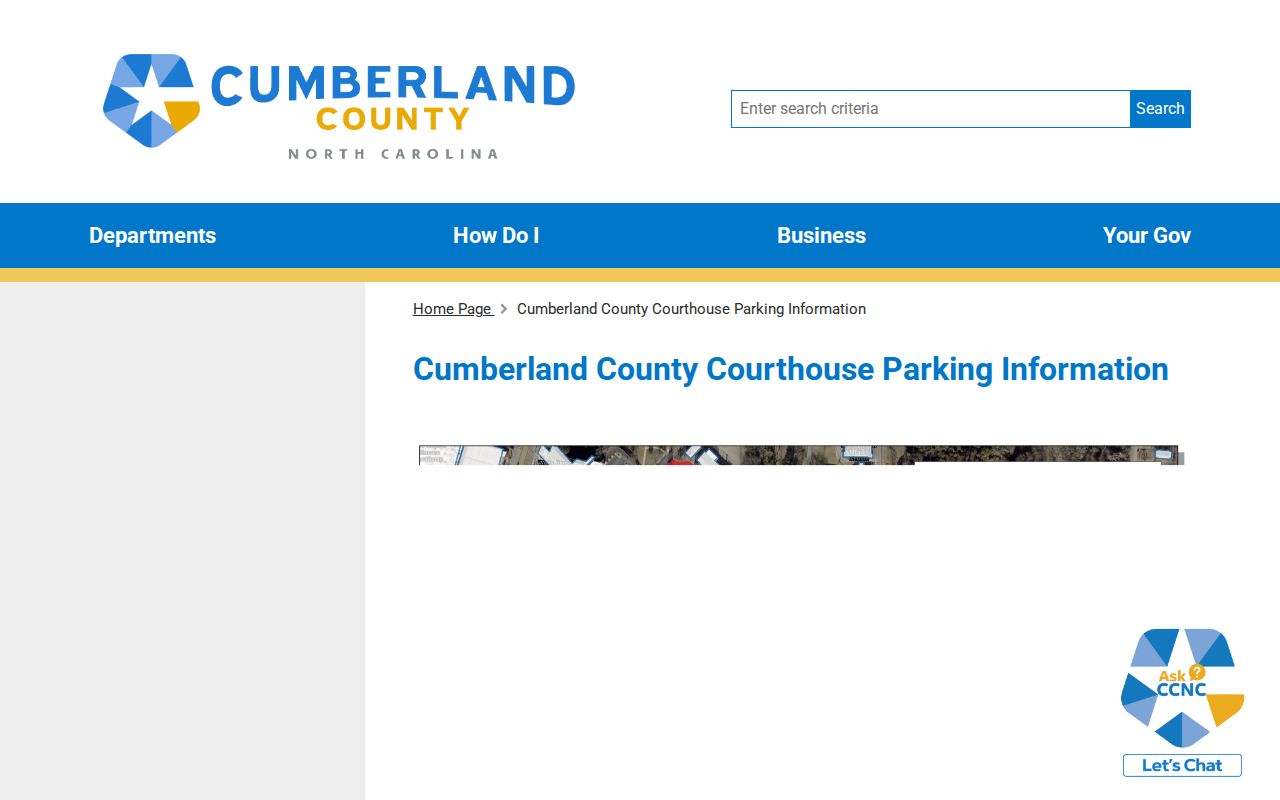
Free weekday parking includes the First Presbyterian Church lot entrance in the 200 block of Person Street, gravel lots at 334 Person Street and 125 South Kennedy Street, and the gravel lot at Otis F. Jones Parkway and Gillespie Street. ADA spaces and short drop-off spots are behind the courthouse. Most rear spaces are staff restricted. Verify current signs and transit routes before travel.
Cumberland Clerk of Superior Court
117 Dick Street, Fayetteville, NC 28301
Mail: P.O. Box 363, Fayetteville, NC 28302
910-475-3000
Cumberland Sheriff and Detention
131 Dick Street, Fayetteville, NC 28301
Sheriff: 910-323-1500
Jail: 910-672-5630 or 910-672-5622
Cumberland County Criminal Records by City
The county’s three largest incorporated places use different local report routes. Fayetteville Police offers report and request channels, including public-request kiosks introduced in 2025. Hope Mills Police operates an Evidence and Records counter in its Rockfish Road lobby. Spring Lake directs public requests through the Town Clerk and requires a signed, dated, sufficiently detailed form. Their custodial arrests can reach the Cumberland jail, and their filed criminal cases use the state court system rather than separate city criminal courts.
Choose the city page for the originating police report. Use the Clerk or eCourts for the prosecution and CCSO for current local custody.
Fayetteville Criminal Records
Population estimate 209,496. Start with Fayetteville Police for city reports and CCSO for jail custody.
Hope Mills Criminal Records
Population estimate 18,102. Police Evidence and Records handles town accident, arrest, and incident reports.
Spring Lake Criminal Records
The county’s third-largest incorporated place. Town Clerk and Police channels begin the local records path.